
Before you start
Read the movements first and clear your space. Start gently, keep breathing, and take extra rest whenever needed. Stop for pain, dizziness, chest discomfort or unusual breathlessness.
These general routines are not rehabilitation or personalised advice. If you have a condition, injury or are unsure whether a movement suits you, ask an appropriately qualified professional.
Set up your space
Clear loose rugs, cables and objects from your path. Check the floor is dry and you can move your arms and step sideways without hitting furniture. A kitchen-themed movement does not require you to stand near a kettle or hot hob.
Preparation and reading happen before the clock starts. The pauses below count towards the session; extend them whenever needed instead of rushing a transition.
Your 2-minute schedule
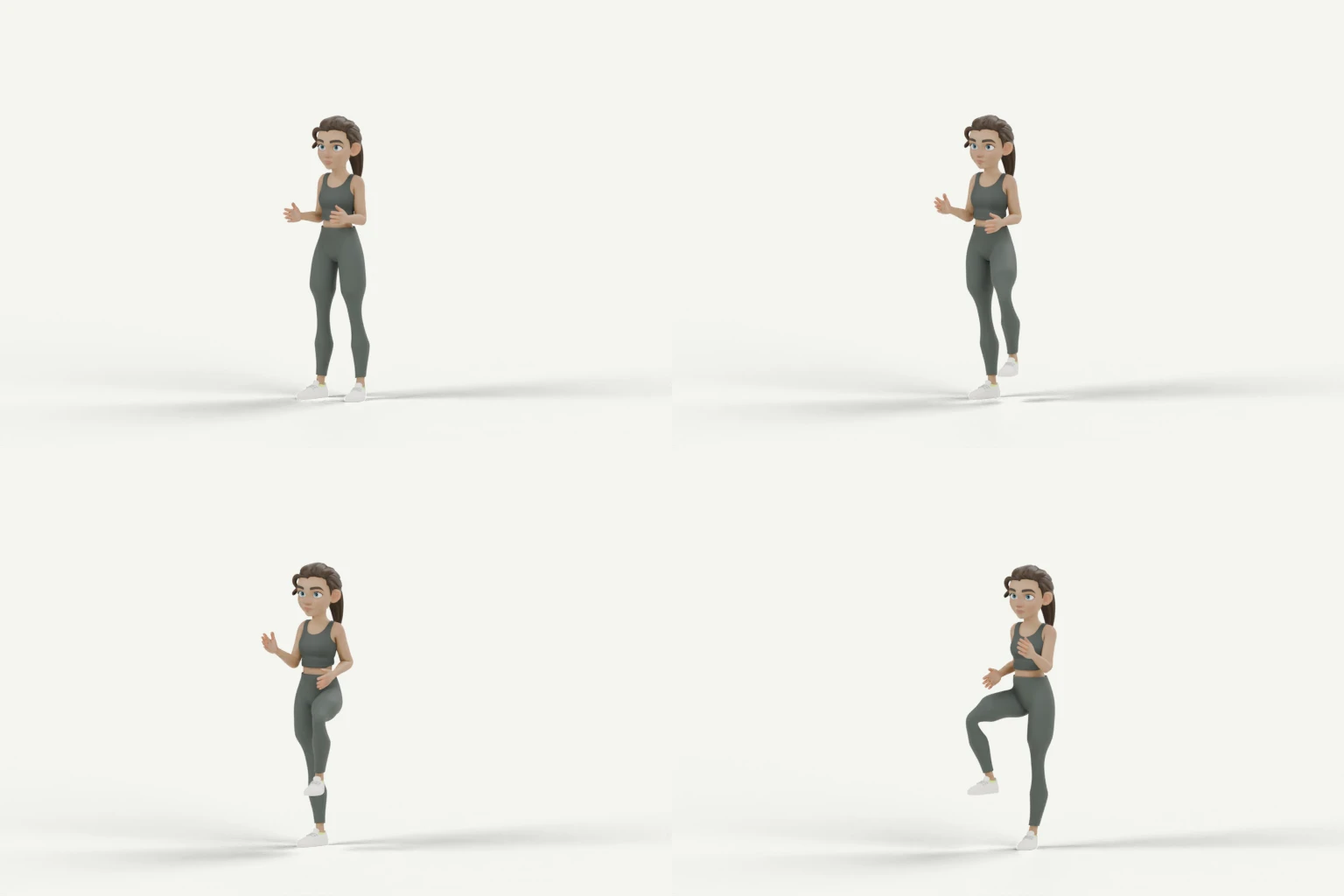
- 0:00–0:20March gently on the spot. Keep knee height comfortable rather than copying the highest pose in an illustration. (20 seconds)
- 0:20–0:30Pause and check your side-to-side space. (10 seconds)
- 0:30–1:00Side steps, using a small comfortable step. No hop between sides. (30 seconds)
- 1:00–1:10Pause; return to your starting spot without rushing. (10 seconds)
- 1:10–1:40March on the spot at your chosen pace. (30 seconds)
- 1:40–2:00Make the march slower, then come to a comfortable stop. (20 seconds)
100 seconds moving and 20 seconds paused. Extra rest may make the elapsed session longer. Finishing at the printed time is optional.
Marching: place each foot with control
Stand tall and alternate lifting and replacing each foot without hopping. Choose a comfortable knee height; you do not need to copy the highest position in the illustration. Start slowly and keep enough room for your arms.
Side steps: use the space you have
Step out to one side and bring the other foot towards it, then reverse direction. Use a small, comfortable step without hopping. Stay within the clear space and pause if you need to reset your position.
Change the session, not your comfort
Take extra recovery, use a smaller comfortable movement or stop early. A seated march is another option if that position suits you, but it is not an identical exercise. It requires a stable, non-rolling chair.
Read the seated march guideThis session is a short selection of movements, not a balanced full-body programme. The duration label does not mean repeating a difficult movement continuously or pushing through discomfort.